Erodium tibetanum Edgew. et Hook.f.
Clade II; Subclade 4; Section Malacoidea; Subsection Richardia
Erodium tibetanum is a perennial; 2-6cm high with a vertical long tough main root; canescent from appressed indumentum, eglandular; forms small rosettes
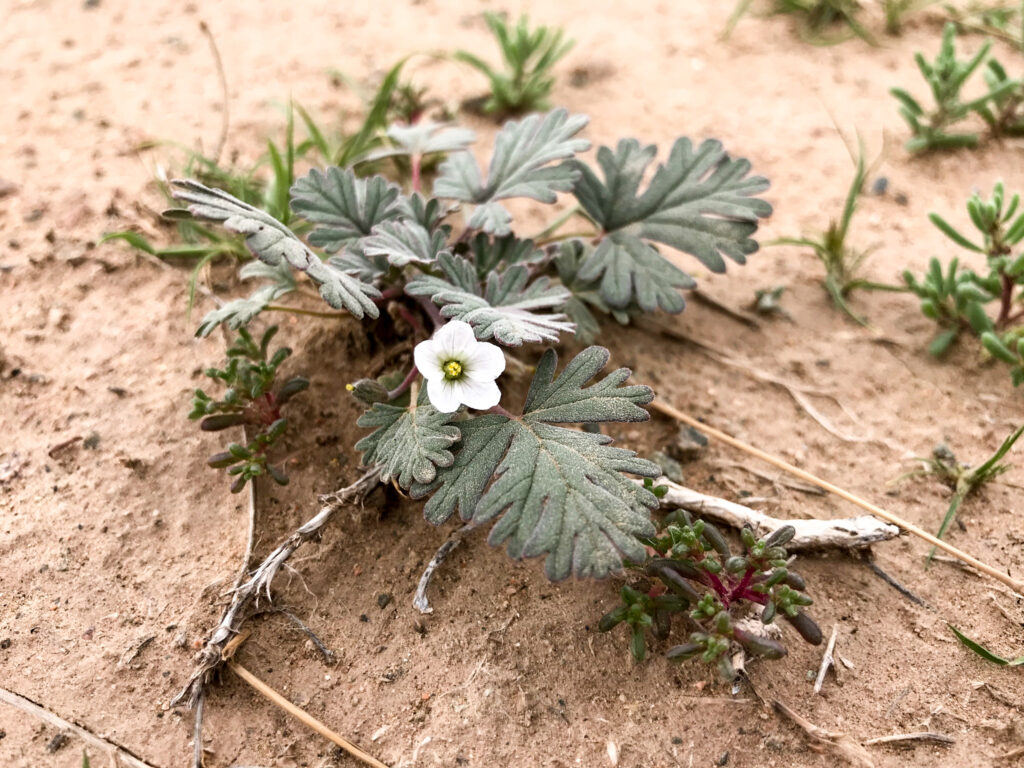
Leaves: Leaves all basal, numerous, the hairy petiole up to 2.5x the length of the lamina, about 2cm long; lamina ovate, cordate at base, entire, pinnatipartite, lobes oblong laciniate, sometimes nearly parted, round crenate.
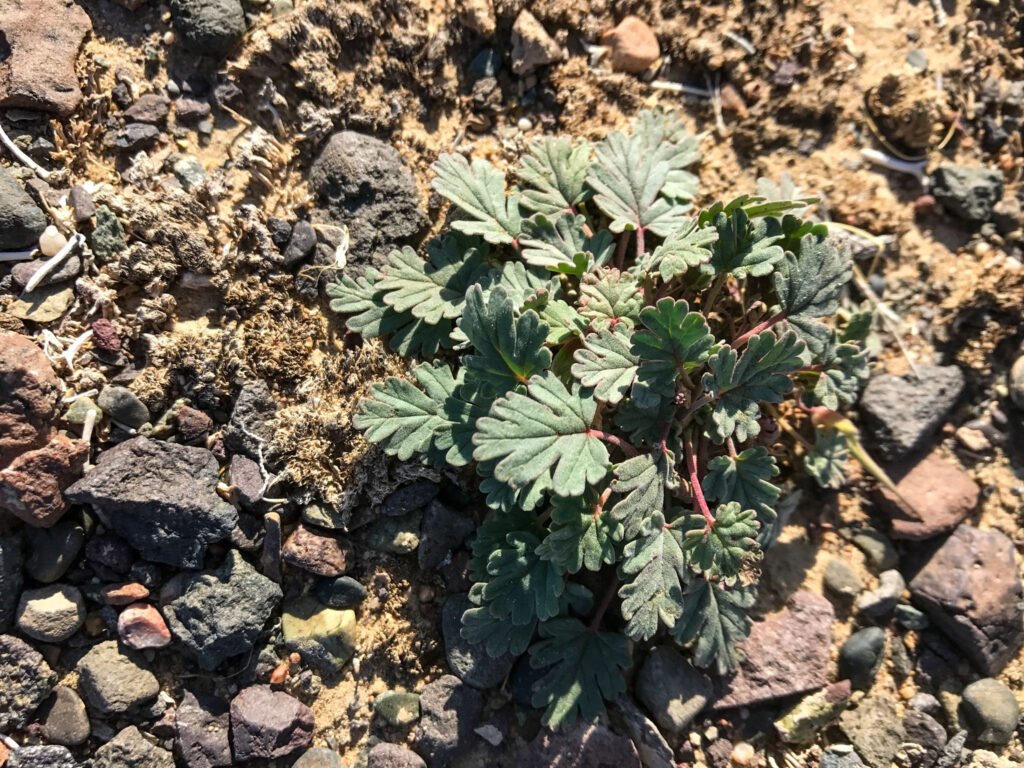
Inflorescence: Umbels arise from the crown or on very short flowering shoots, 2-4 flowered; sepals 3-4 mm long, 6mm in fruit, without a mucro, silvery hairy, with papery edges; petals almost 2x sepals, lilac, light purple or white; pistil hairy. Flowers July to August.
Fruit: Beak 2.5cm; mericarp with rigid hairs, 6mm; foveole eglandular, without a furrow.
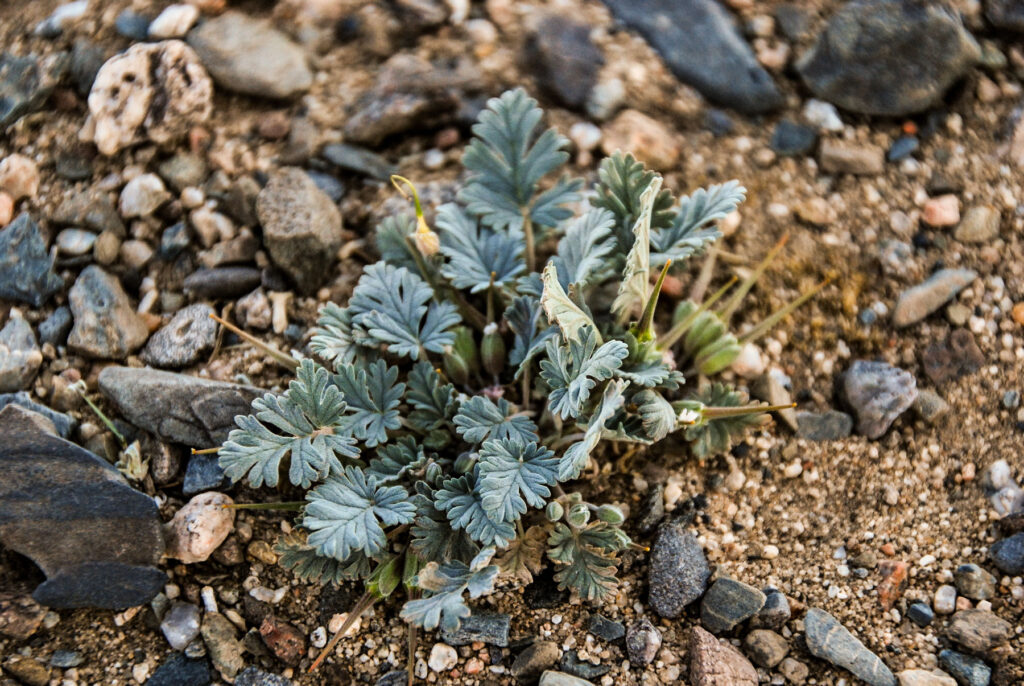
Distribution: Asia – central; endemic to Tibet, Himalayan India, Mongolia, and Gobi Desert, stony places in mountains at 4000-5000m.