Erodium gaillardotii Boiss.
Perennial; root elongate, thin below with one or sometimes two ovate-globose tubers or ovate thickenings; caudex squamose; stem low flexuous, soft and shortly hairy at the base, few and dichotomously branched.
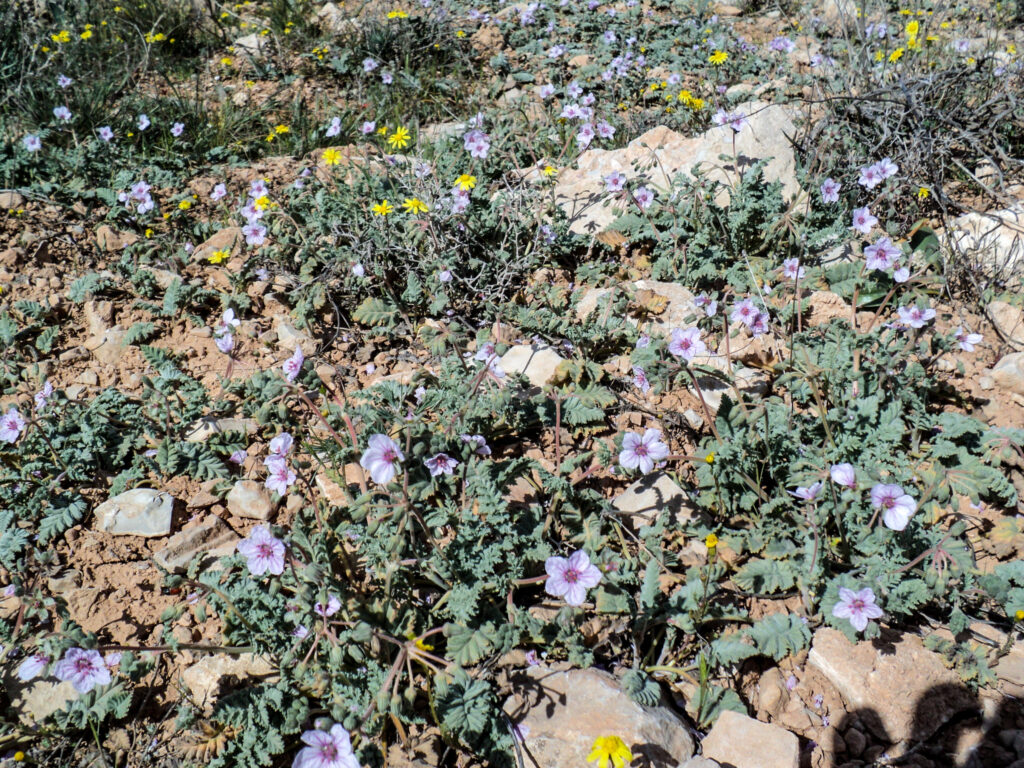
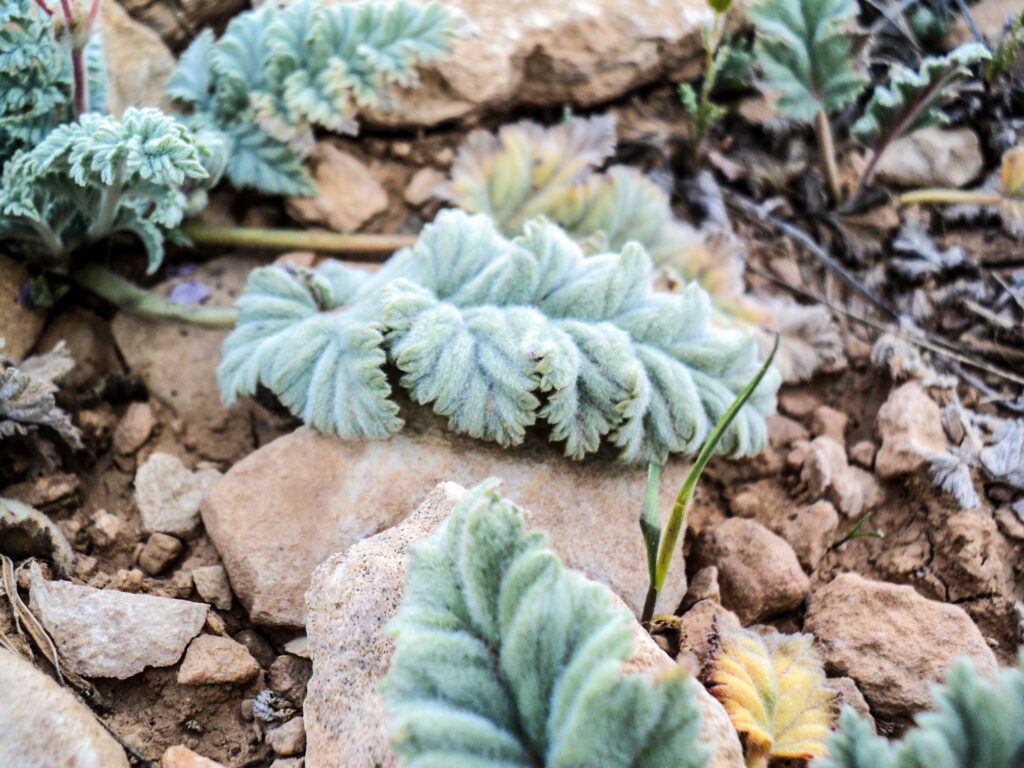
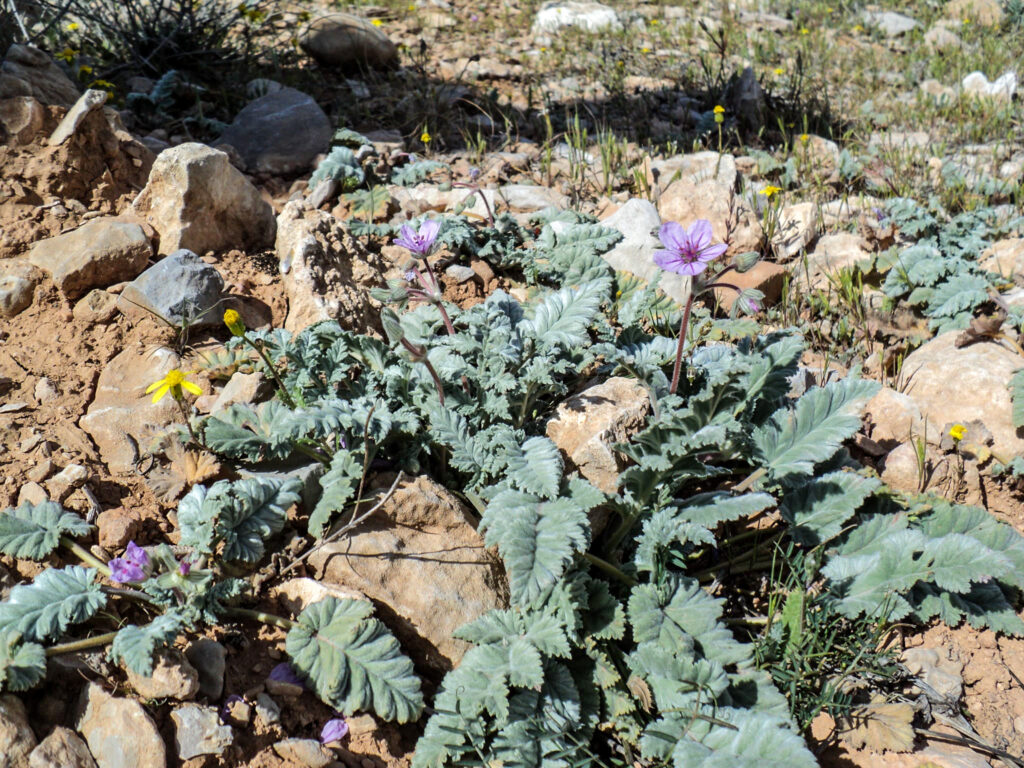
Leaves: radical long petiolate, lamina from cordate base ovate-oblong obtuse, undivided crenate-dentate to trisect, terminal segment much larger base cuneate-subpetiolate often deeply trifid, always adpressed grey sub-silver shielded; cauline leaves smaller, becoming sessile; lacinae short oblong-linear pinnati- or subpinnatipartite.
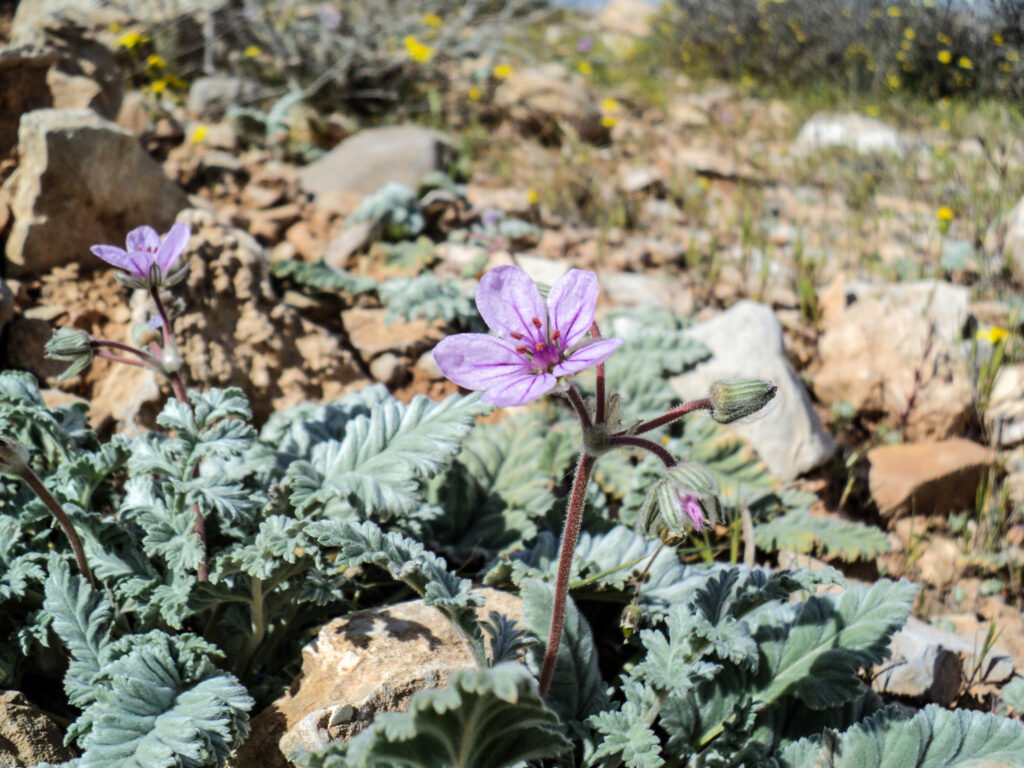
Inflorescence: Flowering stems 8-14 cm, glandular hairy; umbels of 5-7 flowers; pedicels rather long; sepals oblong, 6-7 mm, obtuse mucronate, densely velvety-hairy, green, trilinear; petals 2x longer than sepals, 10-14 mm, obovate, violet; staminodes and stamen filaments pink; pollen orange.
Fruit: Mericarp hairy; rostrum c 40mm.
Distribution: endemic to Syria, Jordan; plain of Damascus and northwards, hilly steppe at 1350m.
First published in Diagn. Pl. Orient. II, 6: 41 1859.
The plant is named after the French physician and botanist Charles Gaillardot