Erodium cazorlanum Heywood
Erodium cazorlanum is an eglandular loosely tufted perennial from South Spain: Jura and Murcia. It is 15-18 cm tall, with a thick woody dark brown rhizome, divided above.
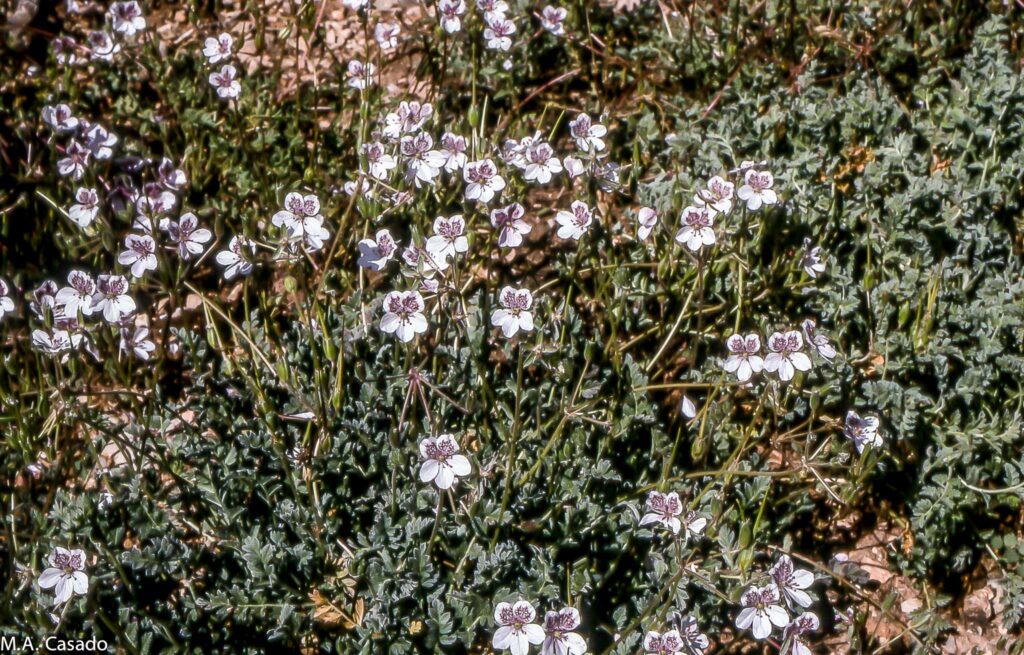
Leaves almost all basal, 3-5 1-1.25 cm, often long-petiolate, oblong, pinnate, both side dense grey tomentose, eglandular; pinnules ± distant, pinnatifid or dentate;. Stipules 5-8 mm, ovate to ovate-lanceolate, acute, brown or whitish.
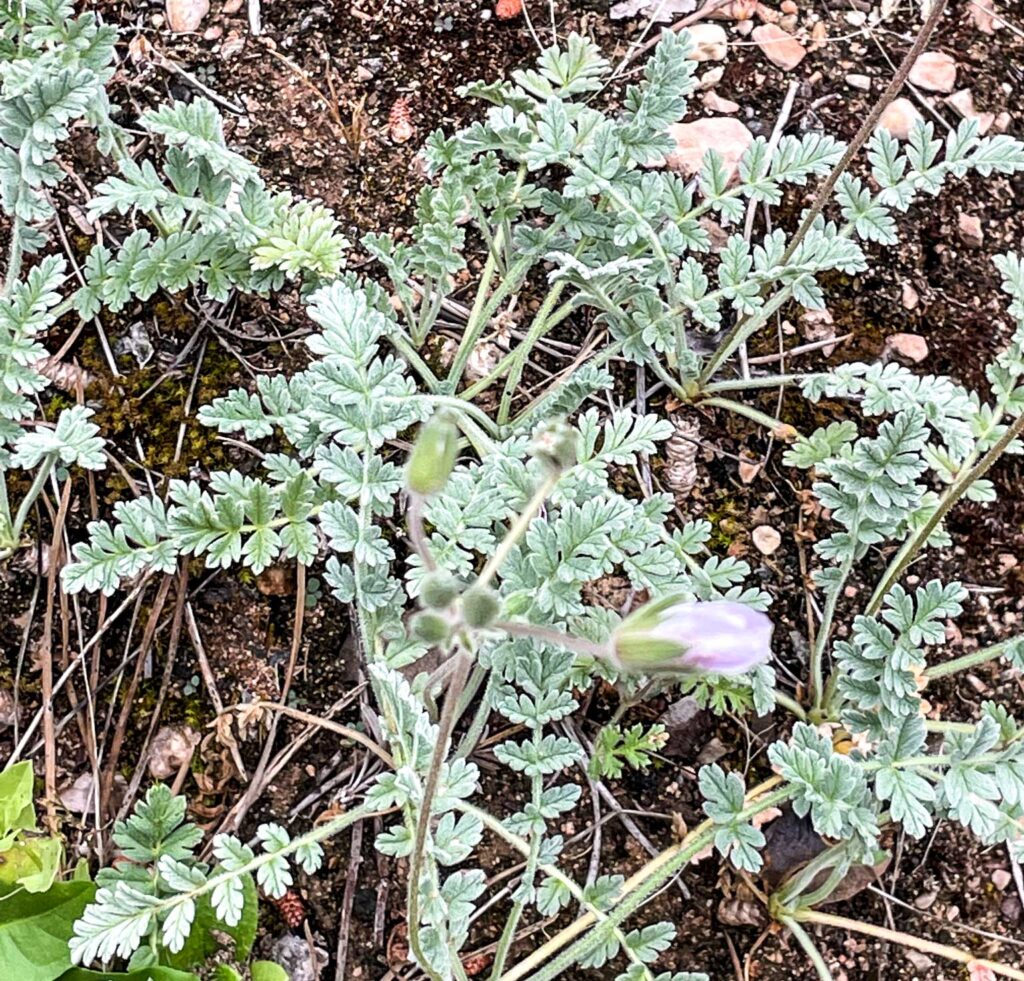
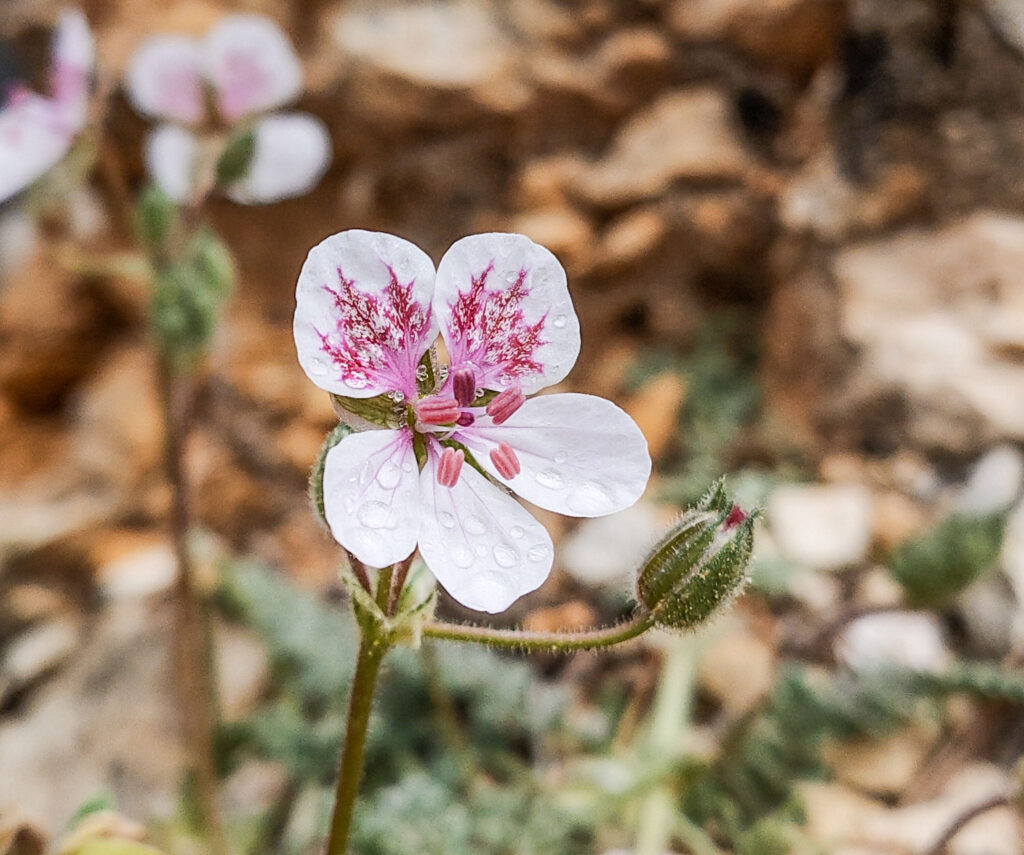
Inflorescence: Umbels of 3-9 flowers; bracts 6-9 joined, lanceolate, acute, white subtomentose, with a green central vein, membranaceous; peduncles with long and glandular hairs especially above, 14-18cm; pedicels 2-4 times calyx length, densely glandular-pubescent; sepals oblong, acute, mucronate, densely glandular 8-10mm; petals 10mm; lilac to pale lilac (almost white), upper two petals feathered red-purple. Flowers June to August.
Fruit 4 cm: Rostrum 30-40 mm; mericarps 8-9 mm; foveoles with no furrow beneath. 2n=80
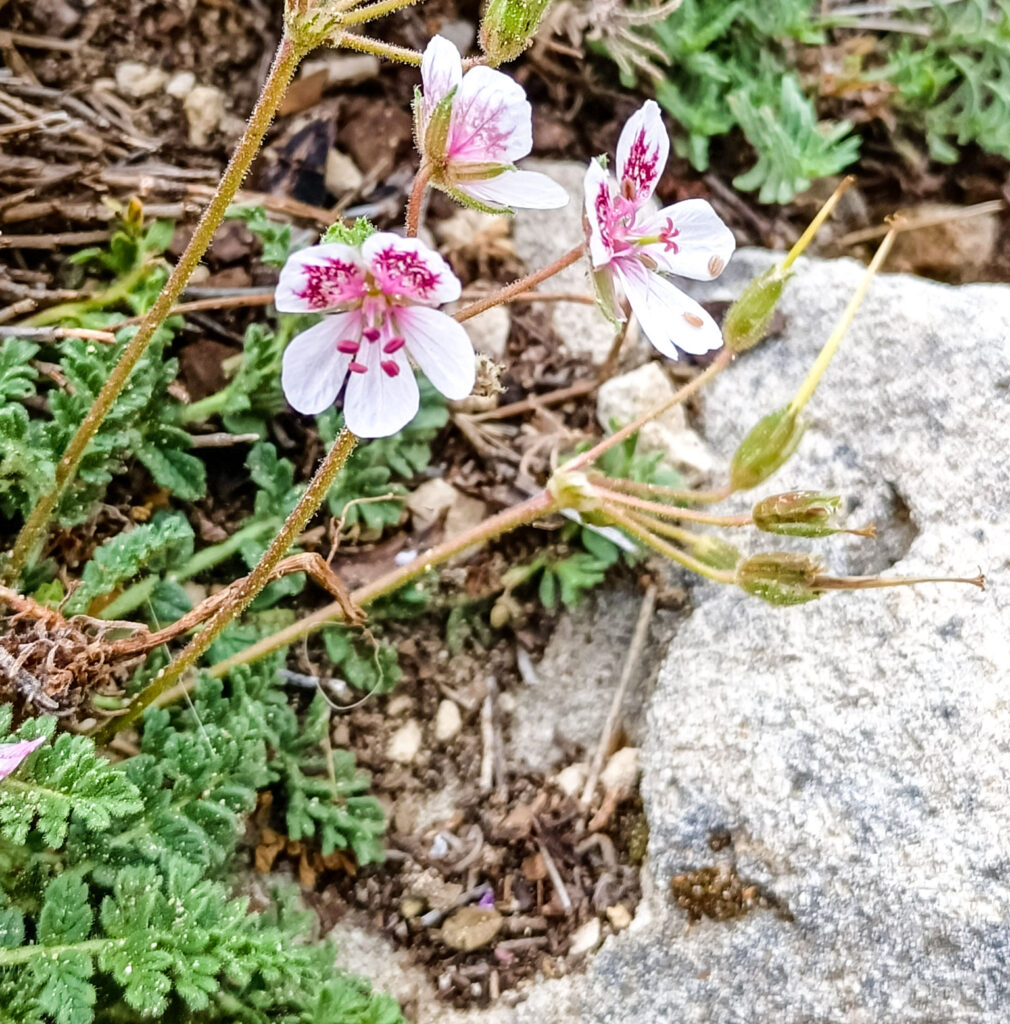
Distribution: Spain: endemic to South Spain, Jura and Murcia: Sierra de Cazorla(J), Sierra del Segura (J) near and on summit of Cuerda de las Moras, Sierra Seca (Mu), limestone rocks and screes in full sun.
Notes: endemic to the Sierra de Cazola massive, and is a member of the E. daucoides complex: very similar to E. daucoides (in fact many authors consider it synonymous) which is separated by its eglandulose habit and the size of its mericarps (8-9 mm). For more on the E. daucoides complex visit the E. daucoides page.
First published in Bull. Brit. Mus. (Nat. Hist.), Bot. 1: 116 (1954)