Erodium brachycarpum (Godr.)Thell.
Erodium botrys is an annual caulescent herb 8-45 cm with fine branching roots; stems are hairy, ascending, with ± retrorse eglandular hairs, and a few long patent glandular hairs.
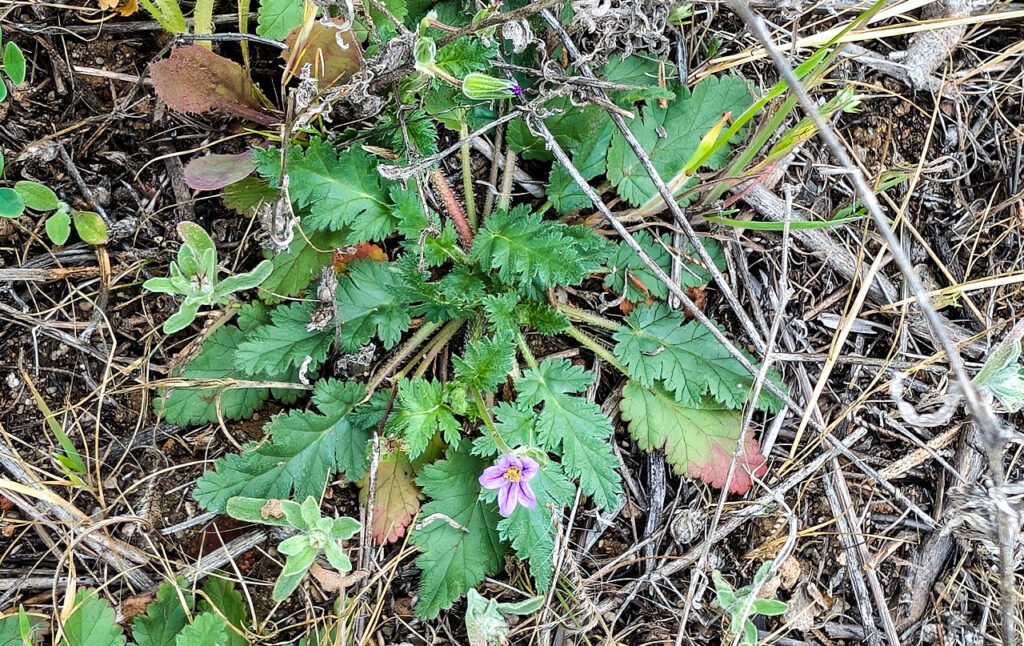
Leaves ovate, pinnatipartite – sometimes the basal segments are separated almost to the vein, with scattered eglandular hairs and rarely a few glands, principle segments 5-9, incised-dentate, with acute teeth; basal leaves with limb 2.5-6 x 1-3.5 cm; petiole 1-6.5 cm; stipules 3-8.5 mm, triangular-ovate, membranaceous, whitish, glabrous.
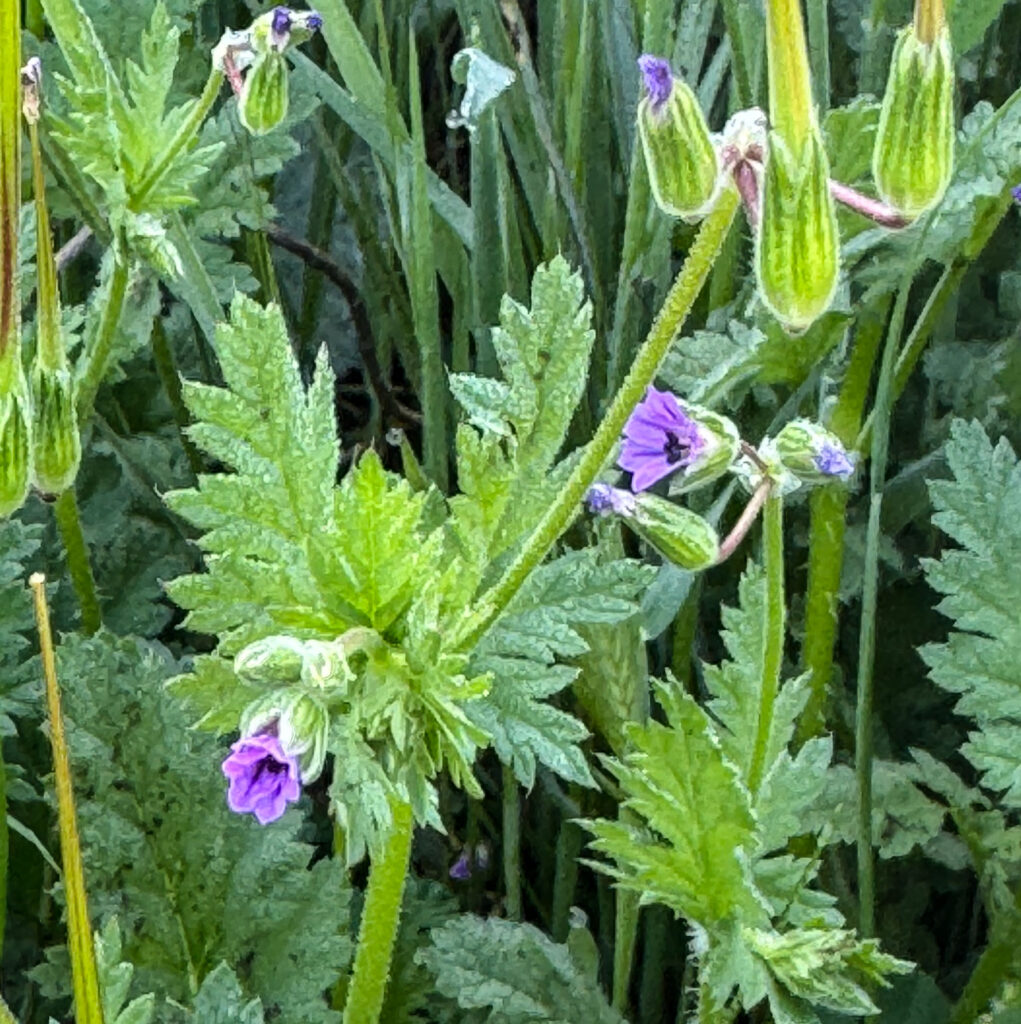
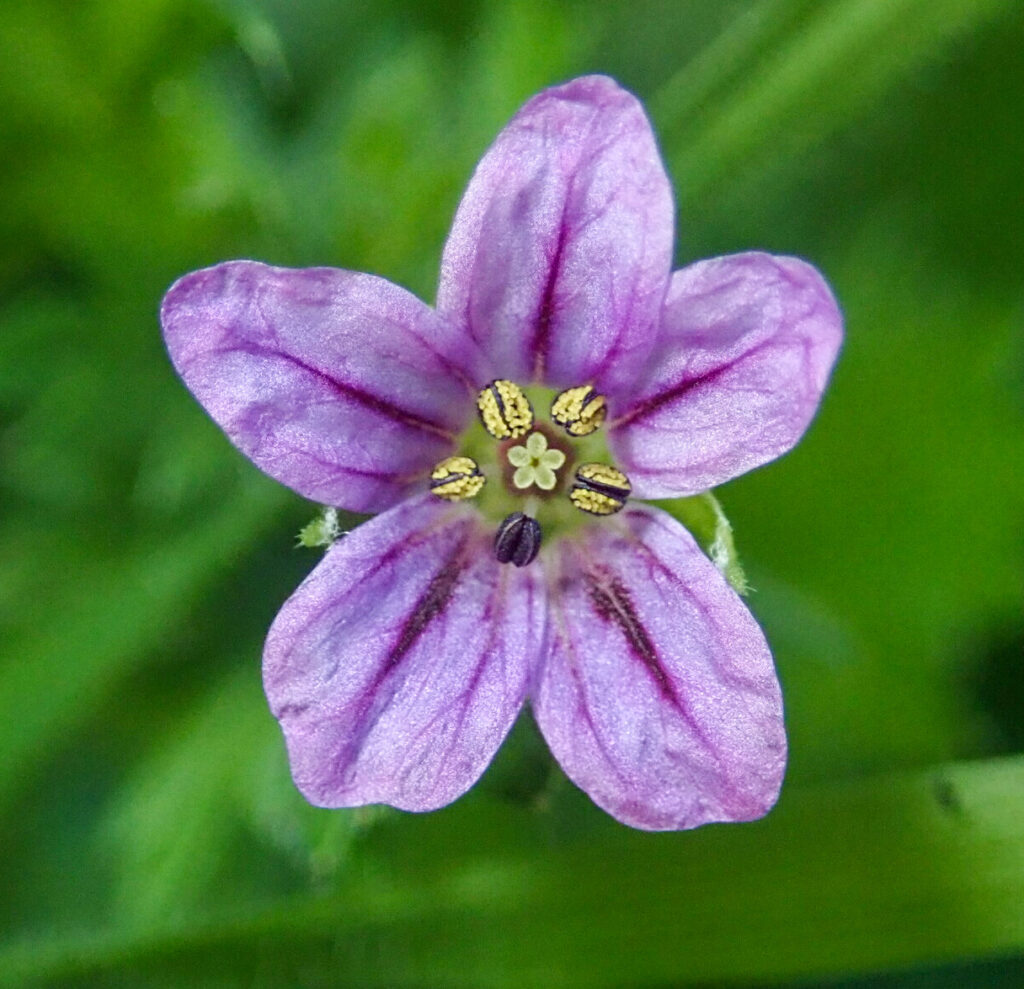
Inflorescence: first umbel stemless from seedling rosette, then branches develop and umbels are axillary with 2-5 flowers; bracts 4-6, 2-2.3 mm, ± welded at the base, scarious, glabrous, whitish, with hairs on the abaxial face; pedicels with ± patent eglandular hairs, and some glandular; sepals 4.5-6.5 x 2-3.5 mm, with glandular and eglandular hairs, not at all red tipped; mucro 0.05-0.2 mm; petals 6.5-7.5 x 2-3 mm, all similar, purple, without spots at the base and with dark central nerve, broader on upper two petals; nectaries green; staminodes pink, glabrous; stamens with filaments gradually widening towards the base, pink, with hairs on the abaxial face; anthers purple, almost black; pollen yellow; stigmas green.
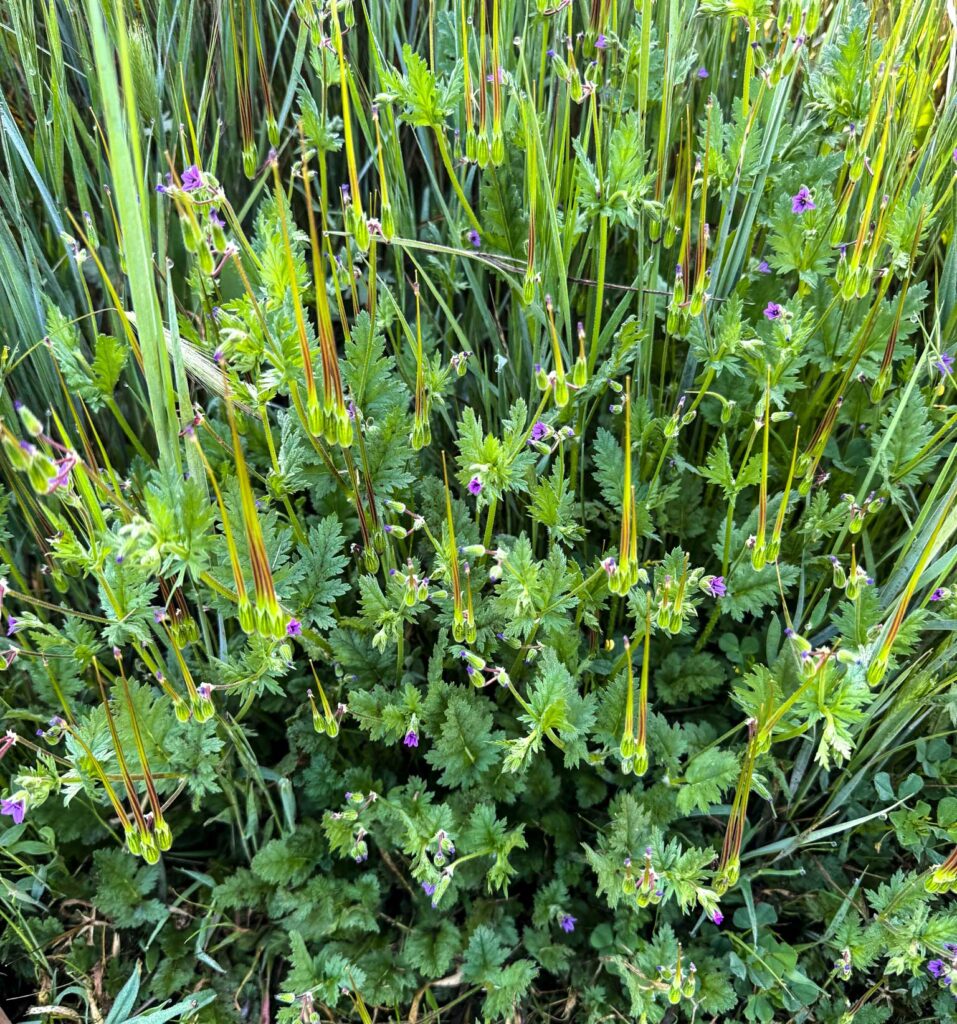
Fruit 57-88 mm; mericarp 5.7-8.8 mm; foveole with one furrow beneath, no glands; beak is red at base and green at tip; cotyledons have only one incision. 2n = 40.
Distribution: On roadsides, cultivated and bare soil 700-1100 m, Algeria, Tunisia, Marocco, Canaries, Spain, southern France, Turkey and Iran.
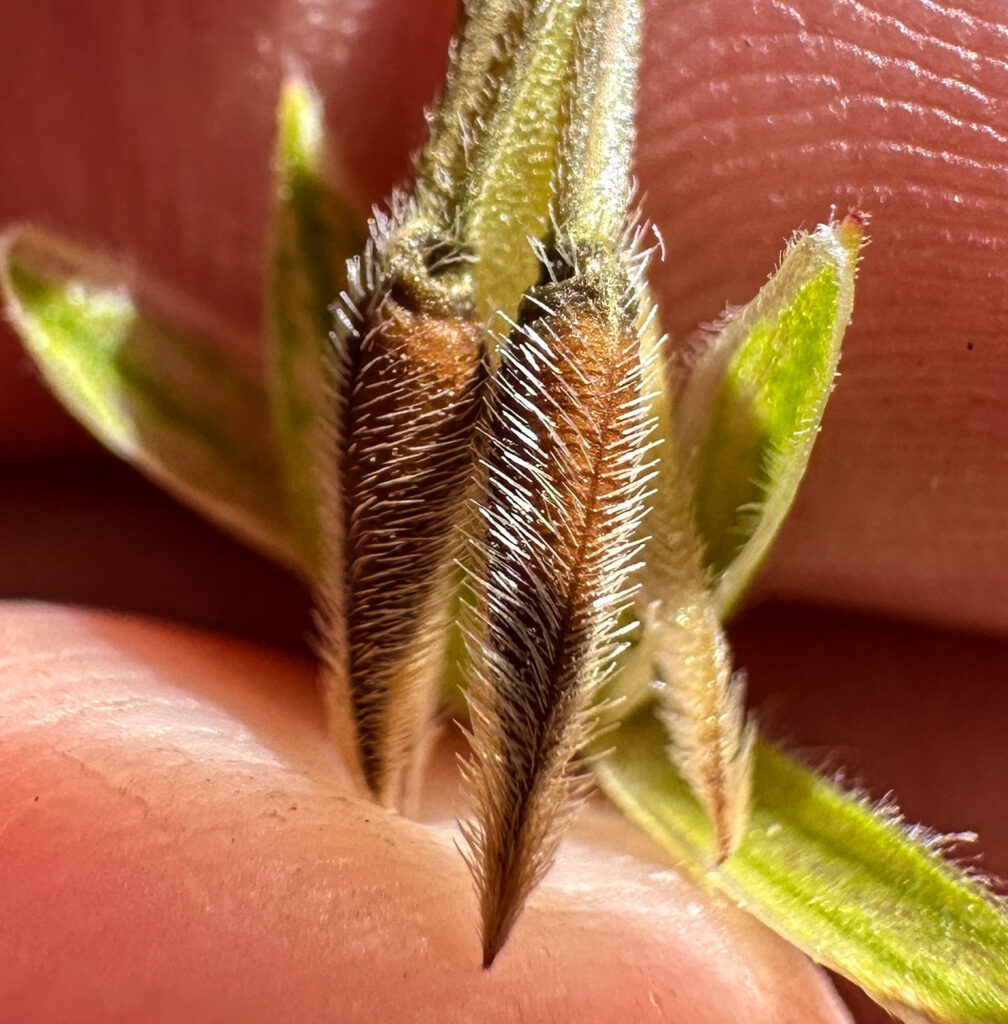
Easily separated from E. botrys by mericarp details.
First published in Rep. Bot. Soc. Exch. Club Brit. Isles 5: 17 (1917 publ. 1918)