Erodium heteradenum (Pau et F.Quer) Guitt.
Clade II; Subclade 4; Section Foetida; series glandulosum.
Erodium heteradenumis a subcaulescent perennial with a long tap root, .
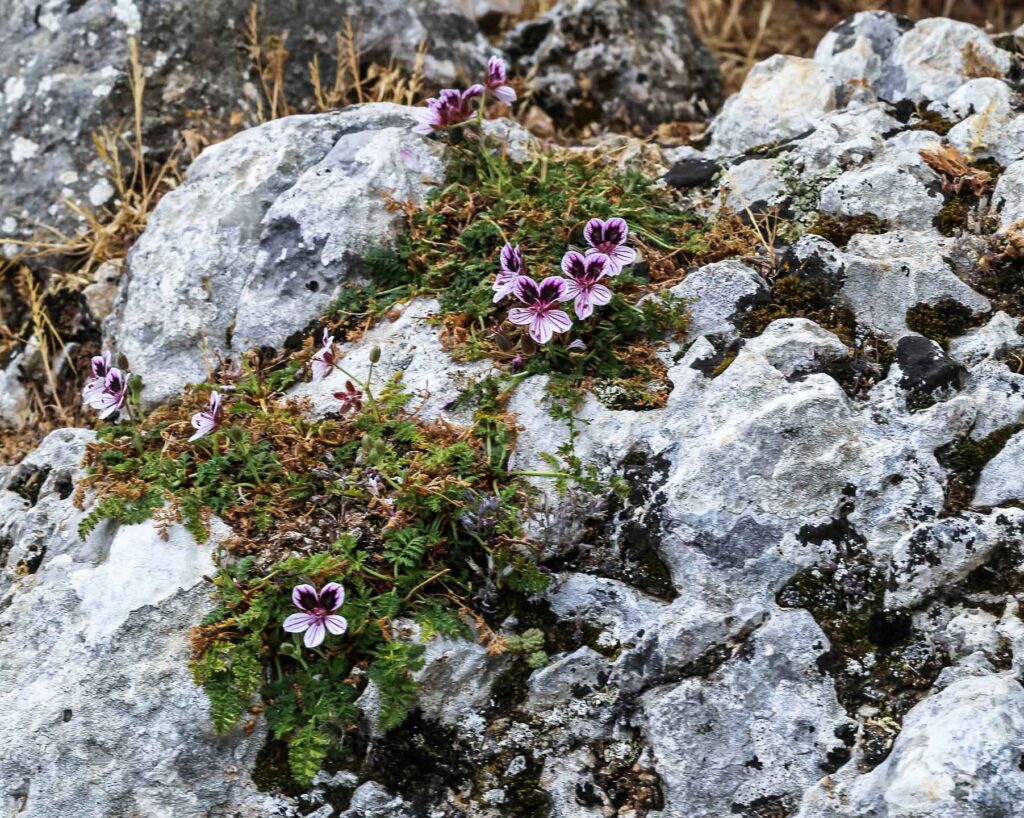
Leaves: lamina ovate, bi- or tri-pinnatisect, with intercalary leaflets, upper and lower surfaces green, soft-pubescent, with eglandular-hairs, and glandular hairs; principal segments 7-15; tertiary lobes, usually longer than wide; leaflets in one plane, sometimes ± in one plane, lobules obovate to spathulate, obtuse, triangular, brownish.
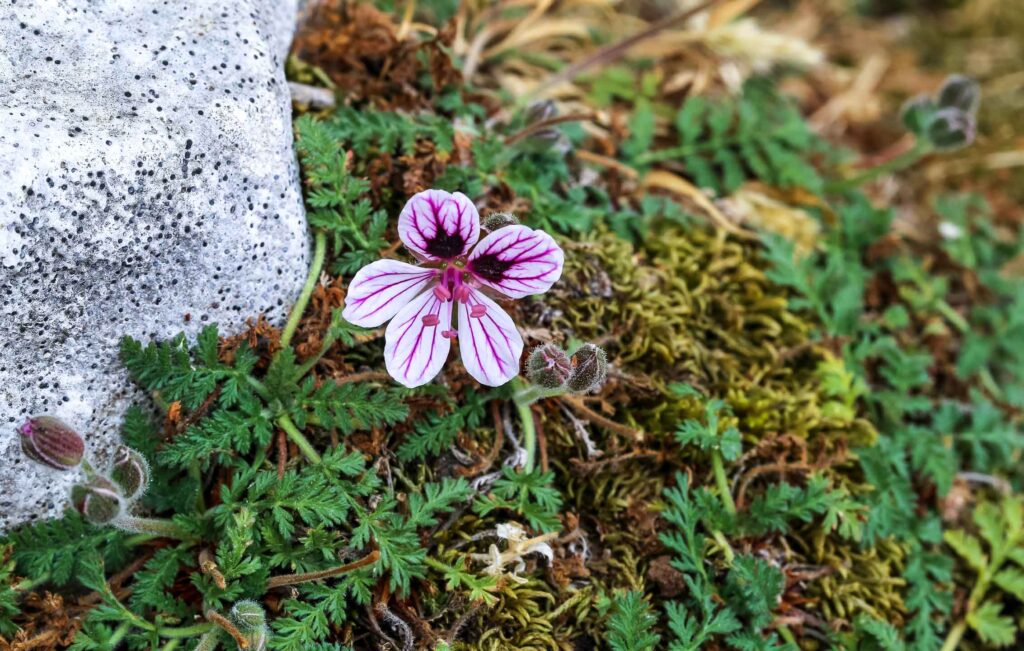
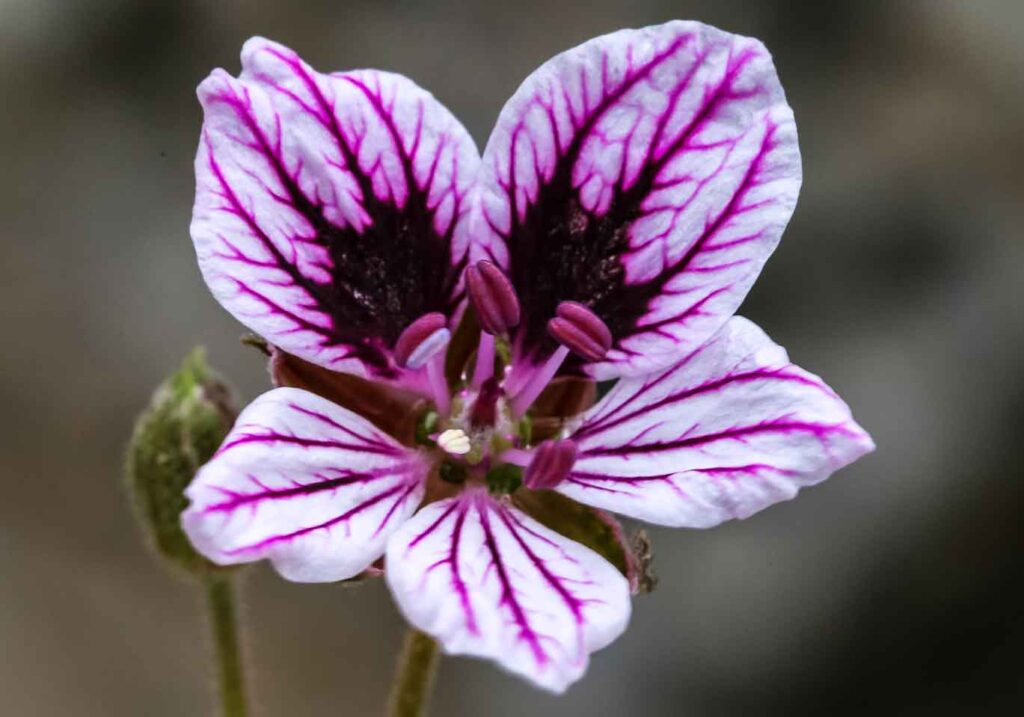
Inflorescence: umbels of up to 7 flowers directly from the base; flowers a little irregular; bracts greenish white, narrowly membranaceous; petals unequal, of one colour, white, with strong lilac veins, the superior 2 petals with a strong solid black blotch, covering ½ or more of the petal, overlapping, lower 3 narrower, not overlapping and unmarked; nectaries olive-green, spherical; staminodes glabrous, pink, stamen filaments glabrous, pink.
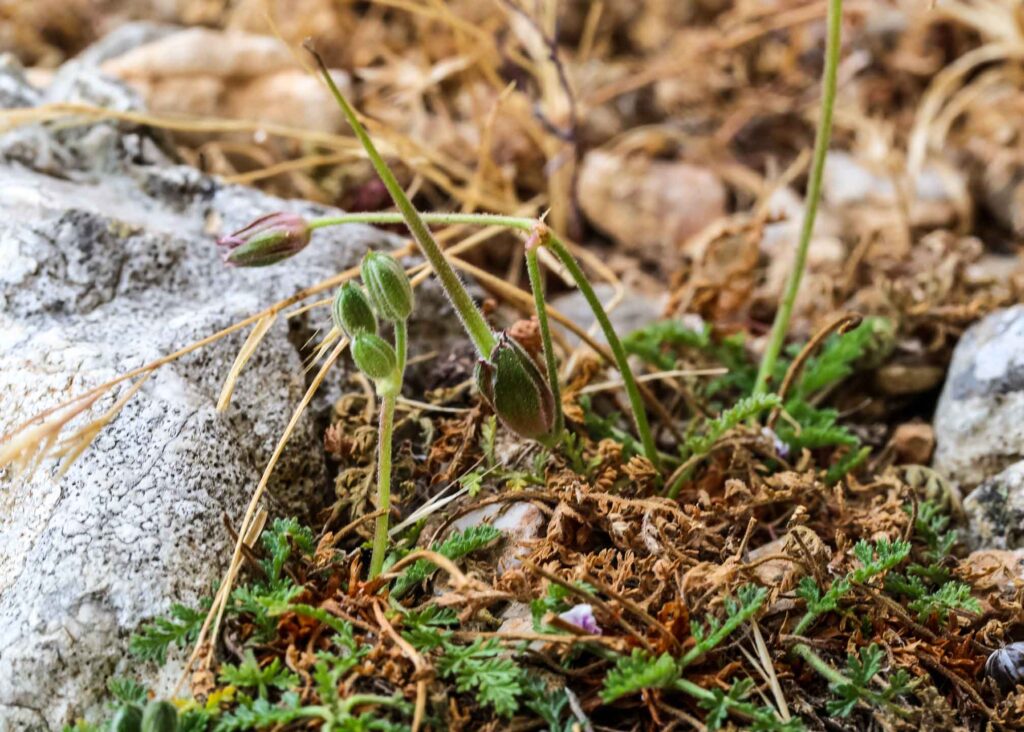
Fruit: fruit 35-42 mm; foveole rather oval, glandular; no furrows. Cotyledons 1-2 incised. 2n=20
Distribution: endemic to North Morocco, Beni-Hosmer, Bou-zeitoune, Gorgoues, in calcareous fissures at 800-1200m