Erodium pelargoniiflorum Boiss. et Heldr.
Erodium pelargoniiflorum is a perennial with a thick contorted truck to about 20cm and thick black tap roots
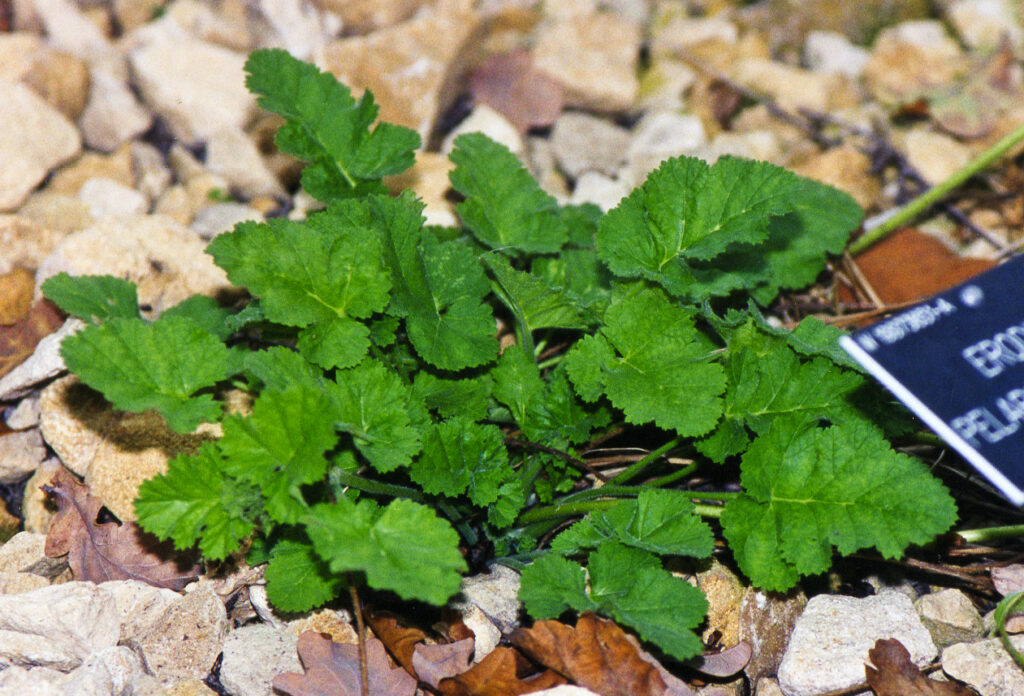
Leaves mostly from the basal caudex, long oval, yellow-green, rather shiny, crenate, little lobed, hairy or not, sticky, leaves when bruised smelling of blackcurrant.
Inflorescence: Annual flowering stems rather short with a few reduced leaves; umbels of 6-8 flowers; flowers about 3cm across, white (or light mauve), 2 upper petals having a large tri-coloured corona-shaped mark (red, white, purple) with light pink or purple rays; flowers and beaks tend to face down; sepals have an obvious mucro of 2.5mm
Fruit: Beak c 3cm, thinner than those of E. trifolium; foveole inconspicuous, narrow, deep, with non-capitate hairs, no fold beneath
2n=20 Guitt.
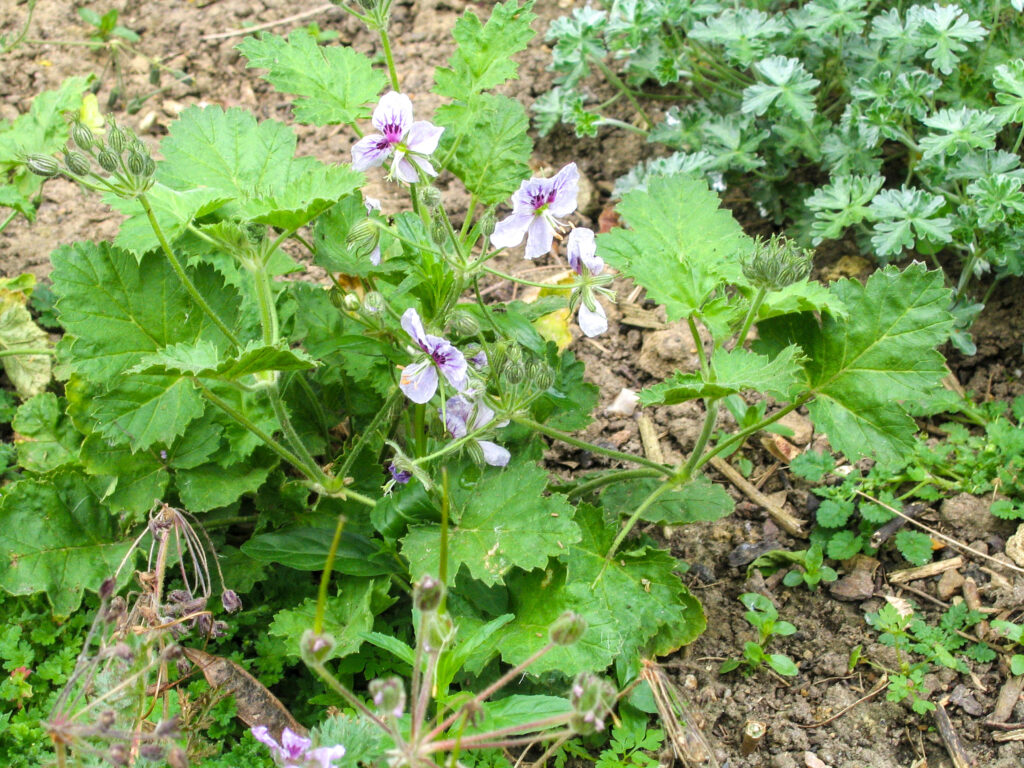
Distribution: endemic to Türkiye (Konya and Isparta provinces); in shady rocky places and the mouths of caves in the mountains of Ghelipel above Ermenk in Cilica Trachaea; limestone rock at 900-1500m.
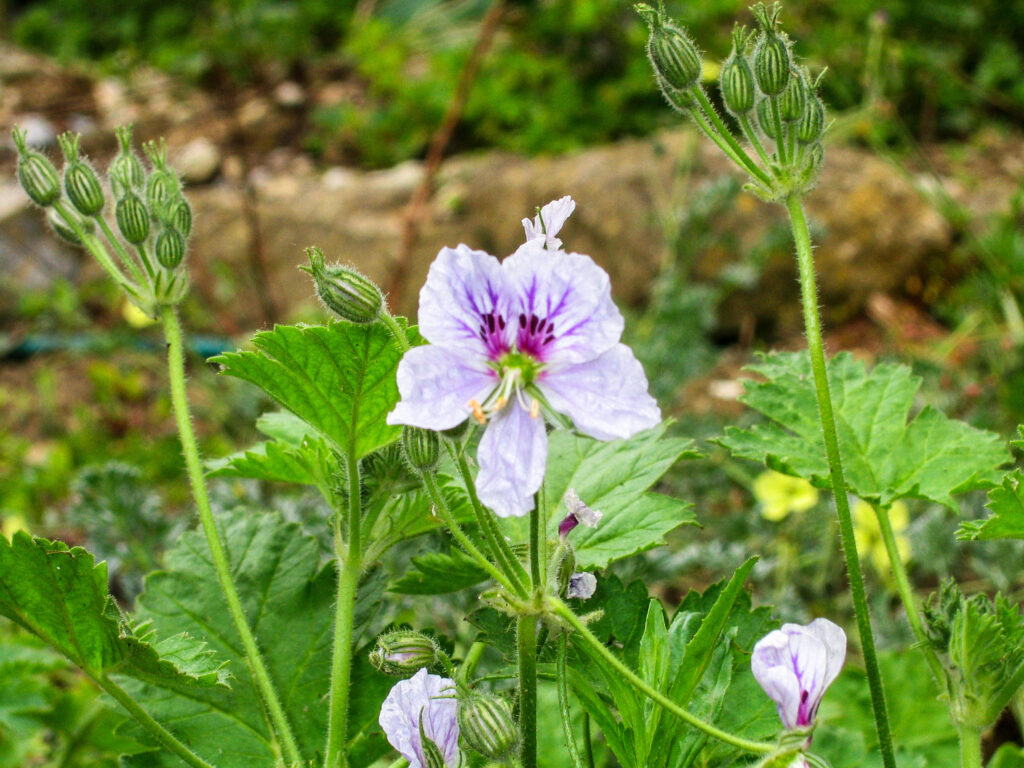
Remarks 1: cultivated plants in UK do not seem to form a trunk.
Remarks 2: Plants in nurseries labelled E. pelargoniiflorum (or even E. pelargoniifolium!!) that do not fit this description are E. trifolium. This is nearly all of them!
Some nursery lists even have E. trifolium as a synonym of E. pelargoniflorum – it is not!